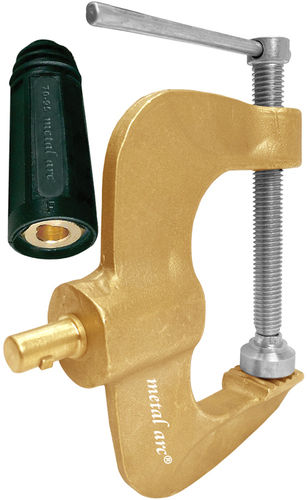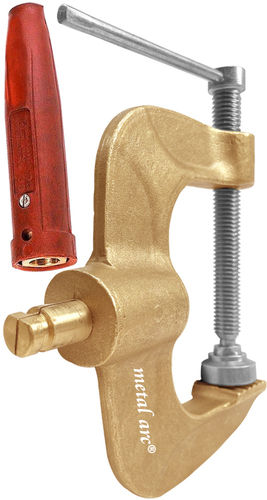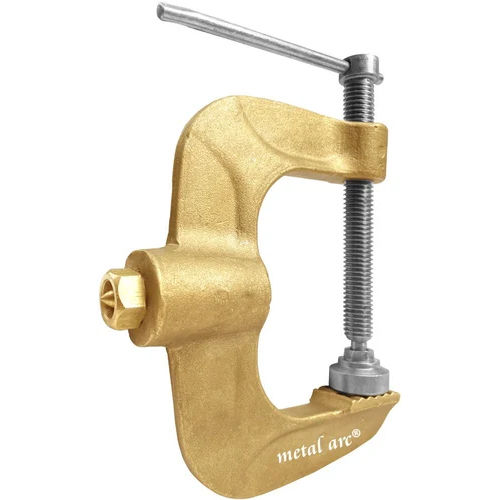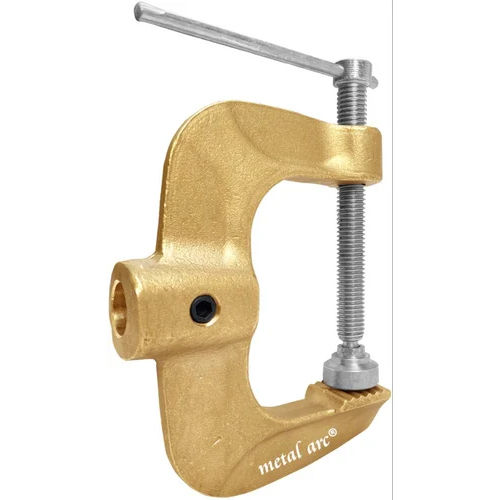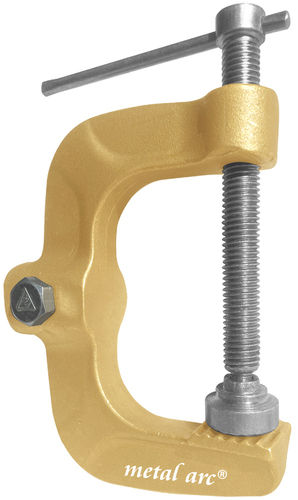
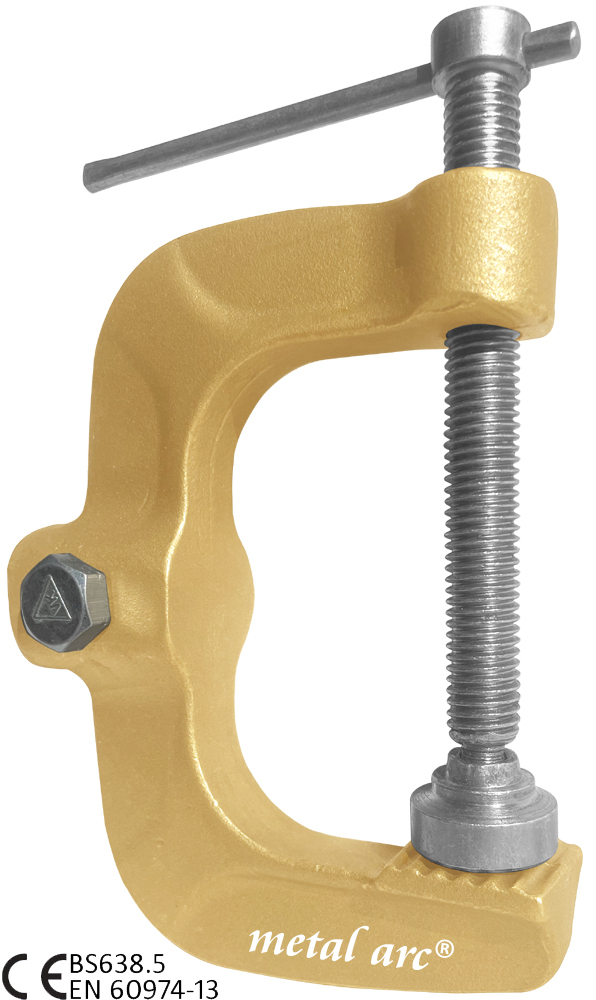
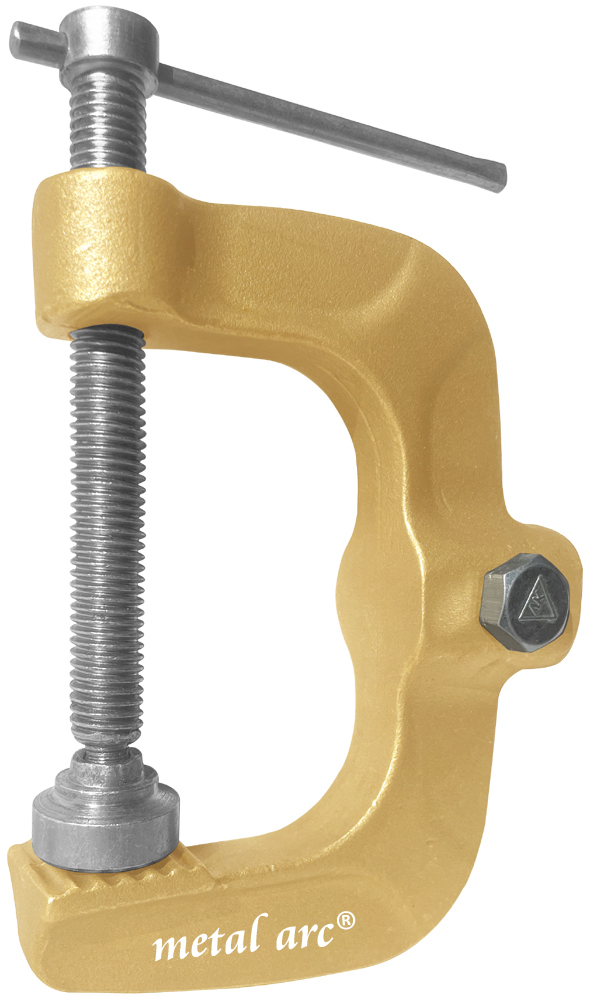
About ST3 Series C Type Earth Clamp ST3B6H1
| Usage/Application |
Welding, Earthing, Grounding |
| Country of Origin |
Made in India |
| Shape |
C Type |
| Current Range |
Upto 1200 Amps |
| Material |
Brass |
| Brand |
metal arc |
In order to provide our clients maximum satisfaction, manufacturing of this CE Certified C Type Earth Clamp is done in accordance with the set industry norms. Owing to the usage of quality raw materials and modern machines, the offered product is known for superior durability, commendable dimensional accuracy and high sturdiness.
Features:
- CE Certified - EN-60974-13
- High Copper Alloy Body
- Heavy duty body for greater conductivity
- Designed especially for the MIG welding process
- C-type jaws are adjusted by screw lever
- Powerful swivel pad allows for low resistance ground connections
- High clamping pressure/ force connection ensure optimal current transfer
- Rugged Sturdy & Durable Design
- BS638.5
- High Grade Copper Alloy
- Large contact surface area
- Heavy duty "T" Spindale
- Low Maintenance & Easy to use
- Optimal Current Transfer
- Suitable for Ball Point Connection
- Oxidation resistant
- Screw-on type Clamping
- Safe & Quick Connection
- 100% MADE IN INDIA
Models:
|
Model No.
|
Maximum
|
Body & Connection
|
|
Amps
|
Cable
|
|
ST3B6H1
|
1200
|
50 - 120 mm2
|
Brass Body with Bolt Down Connection OR Lug
|
Specifications:
- Suitable for up to 120 mm2Cable
- Suitable for up to 1200 Amps
- Suitable for Easy Bolt Down Connection OR Lug Connection
- Heavy duty Spindale
Superior Material for Enhanced DurabilityCrafted from pure copper with a robust brass or bronze finish, the ST3B6H1 earth clamp resists corrosion and delivers excellent conductivity. Its structured metal composition ensures longevity and consistent earthing results in harsh industrial environments.
Versatile Industrial ApplicationsDesigned for welding, earthing, and grounding, this rotary G clamp adapts to diverse operations. Its compatibility with various sizes makes it suitable for different industrial equipment, streamlining electrical safety practices in manufacturing settings.
FAQ's of ST3 Series C Type Earth Clamp ST3B6H1:
Q: How is the ST3 Series C Type Earth Clamp ST3B6H1 utilized in industrial settings?
A: The ST3B6H1 earth clamp is primarily used to create secure grounding connections during welding, earthing, and grounding procedures. Its robust G clamp structure allows it to attach firmly to workpieces or grounding rods, ensuring electrical continuity for industrial safety.
Q: What advantages does the copper construction provide for this earth clamp?
A: Copper's superior conductivity ensures efficient electrical transmission, while the brass or bronze finish enhances corrosion resistance. These materials collectively increase the clamp's durability, reliability, and suitability for heavy-duty industrial use.
Q: When should the ST3B6H1 earth clamp be installed or replaced?
A: This earth clamp should be installed whenever a secure grounding connection is needed in welding or industrial earthing systems. Replacement is recommended if signs of significant wear, corrosion, or diminished conductivity are observed to maintain safe operations.
Q: Where can this earth clamp be sourced in India?
A: The ST3B6H1 model is available through specialized electrical component manufacturers and suppliers across India. Many reputable vendors stock a range of sizes to meet specific industrial requirements, ensuring accessibility for varied applications.
Q: What is the process for securing this G clamp to a workpiece?
A: To secure the clamp, the rotary mechanism is adjusted to open the jaws, which are then positioned on the workpiece or grounding rod. Once in place, the mechanism is tightened to ensure a stable, conductive, and safe electrical connection during usage.
Q: What benefits does the rotary shape offer for industrial use?
A: The rotary shape provides flexibility and convenience, allowing users to easily adjust and position the clamp for optimal contact. This design feature improves efficiency, reduces installation time, and minimizes risk during grounding tasks.